












About the Climate Action Initiative
In each edition, Counterpublic identifies key focus areas for long-term impact. For the 2026 exhibition cycle and beyond, Counterpublic is piloting a comprehensive climate action plan for bi- and triennials and large-scale exhibitions, featuring shareable tools for arts organizations of all kinds.
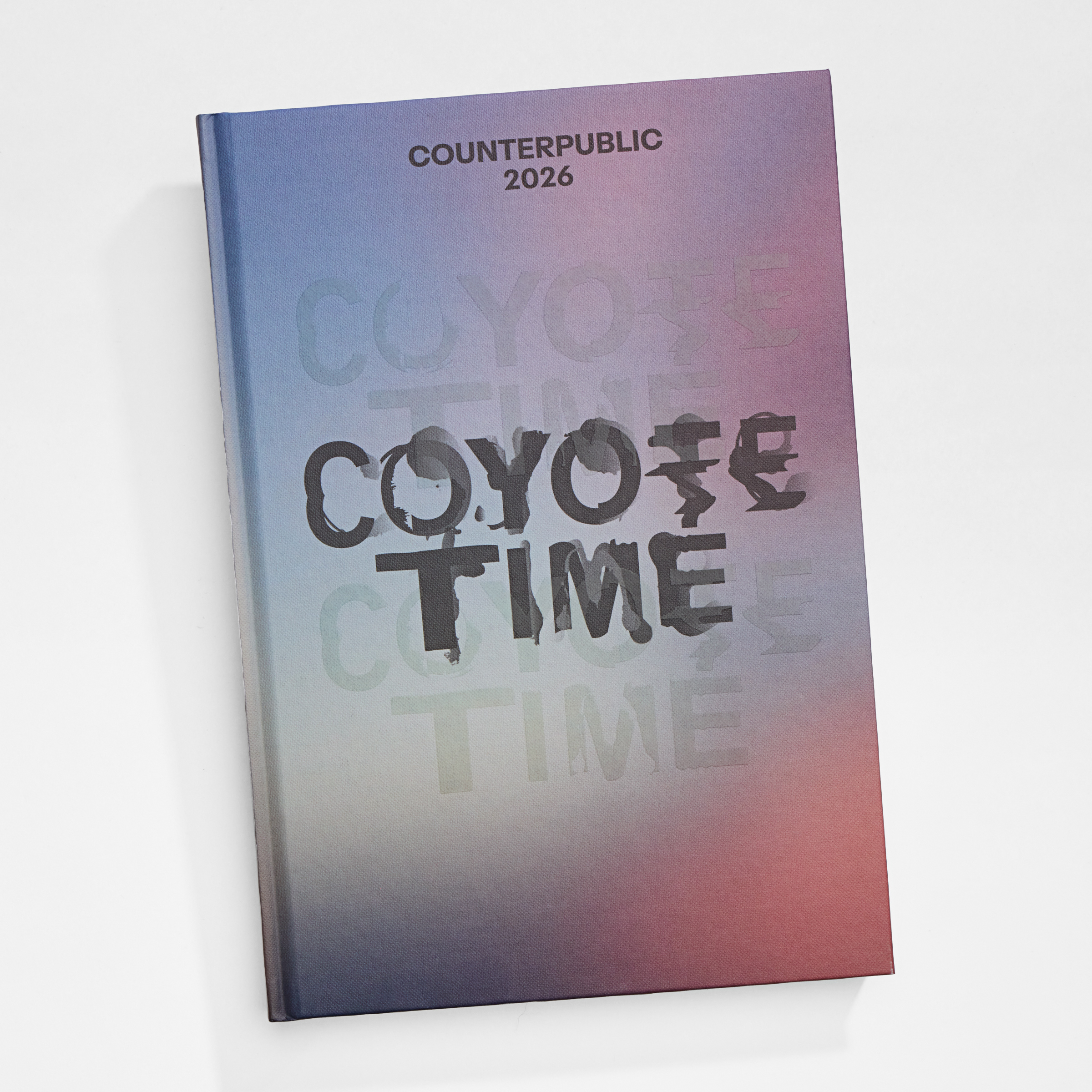
This climate action framework is at the center of the Counterpublic 2026: Coyote Time exhibition. Through a range of approaches, we aim to build a roadmap for more sustainable models to exhibition making. The climate action framework emphasizes environmentally responsible production practices, supporting visitors in imagining low-carbon futures, and promoting transparent accountability for exhibition impacts.
With the support of the Helen Frankenthaler Foundation, for Counterpublic 2026: Coyote Time we have created low and no-carbon exhibition experiences, commissioned regenerative artist projects, and embedded climate action into every aspect of the exhibition planning and implementation. The climate action framework will particularly be a focus of our midpoint Convening: Climate Futures and Infrastructural Imaginaries from October 23-25, 2026 that will bring together climate experts, artists, and other leaders in the field to discuss climate work within exhibition making. The three day Convening will feature conversations, performances, and embodied experiences that focus the conversation on the long-term impacts of remediation and climate action within the contemporary art field.
Counterpublic 2026 Climate Impact Focus Areas
- Artwork and Site Production
- Communications, Storytelling, and Visitor Experience
- Tracking, Reporting, and Accounting
Counterpublic 2026 Key Climate Initiatives
Climate-Related Artist Commissions
- Artworks with long-term remediation and net carbon impacts
- Stories and themes within artworks that educate and inspire the public
Sustainable Exhibition Sites
- Responsible waste management at exhibition hubs
- Zero-waste and low-waste installations and buildouts
- Efficient travel and shipping choices
Zero-Carbon Visitor Options
- Walkable exhibition locations
- Digital exhibition guide through Bloomberg Connects, reducing paper printing
- Bike rentals and electric vehicle shuttles for carbon-friendly transportation
Climate Action Publications
- Climate Impact Report for Counterpublic 2026
- Climate Action Guide for Exhibitions that includes tools for the field, guidelines for exhibitions, artists and curators, and a reflection on the process and implementation of a climate action plan
Climate Guidelines and Tracking
To promote sustainable artwork production, Counterpublic developed a set of climate guidelines for artwork production and invited artists and curators to incorporate these into project designs. Guidelines include decision-making maps for four key impact areas:
- Travel
- Shipping
- Material management
- Visitor engagement
To establish data-backed performance metrics, Counterpublic will track greenhouse gas emissions from organizational functions, travel, and shipping, as well as material management strategies from each artist project and exhibition site. Individual projects fulfilling the criteria from the Climate Guidelines for Artwork Production will receive special recognition.
The 2026 edition will be a benchmark year, representing the first time carbon performance metrics are tracked. Data collected from this edition will allow us to set future targets and prioritize reduction strategies. Target areas include:
- Connecting artist commissions with climate action
- Reducing buildout waste
- Ensuring efficient travel
- Ensuring efficient shipping
- Improving staff and visitor transit emissions to get to and from project sites
- Increasing visitor engagement around climate
- Supporting partner sites and organizations to take long-term climate action
- Contributing to thought leadership around climate mitigation, resiliency, and adaptation for biennials and triennials
At the close of the exhibition, a full report will be presented with a greenhouse gas inventory, an overview of mitigation and adaptation actions and their results, opportunities for setting future targets and reductions, and carbon accountability plans.
Through this process, Counterpublic hopes to better prepare itself to adapt to the challenges ahead. We aim to do what we can to mitigate the effects of a heating planet on our own community and model the future of exhibitions for biennials and triennials worldwide in the face of a changing planet.
Text prepared by Kristin Fleischmann Brewer and James McAnally of Counterpublic, and Laura Lupton, CEO of Field Forms.
Field Forms is an environmental consulting firm that works on projects centered on culture, climate, and our collective future. This work was made possible by a Frankenthaler Climate Initiative Grant, which supports energy efficiency and sustainability in the visual arts.
With Support From