










About Cultural Agreements: North City
Facilitation and Representation
About Cultural Agreements: North City
Overview
Cultural agreements articulate a desired relationship between Counterpublic and the residents of North St. Louis City engaged in the exhibition – in this case, specifically residents and businesses located in The Ville neighborhood as a site for the 2026 exhibition. The agreements are a measure of accountability, guiding how Counterpublic should respond to the expressed needs, interests, and expectations of residents in its relationship with North St. Louis City. The agreements were prompted and led by artist and trauma-informed care facilitator, Dail Chambers, and Melisa Sanders, Director of Community Engagement for Counterpublic. Under their leadership, invitations were extended to artists, organizers, and residents of The Ville (and other North St. Louis City neighborhoods) to collaboratively develop the ten terms contained in this document. The agreements are a living document meant to evolve through community input as relationships strengthen or accountability is needed.
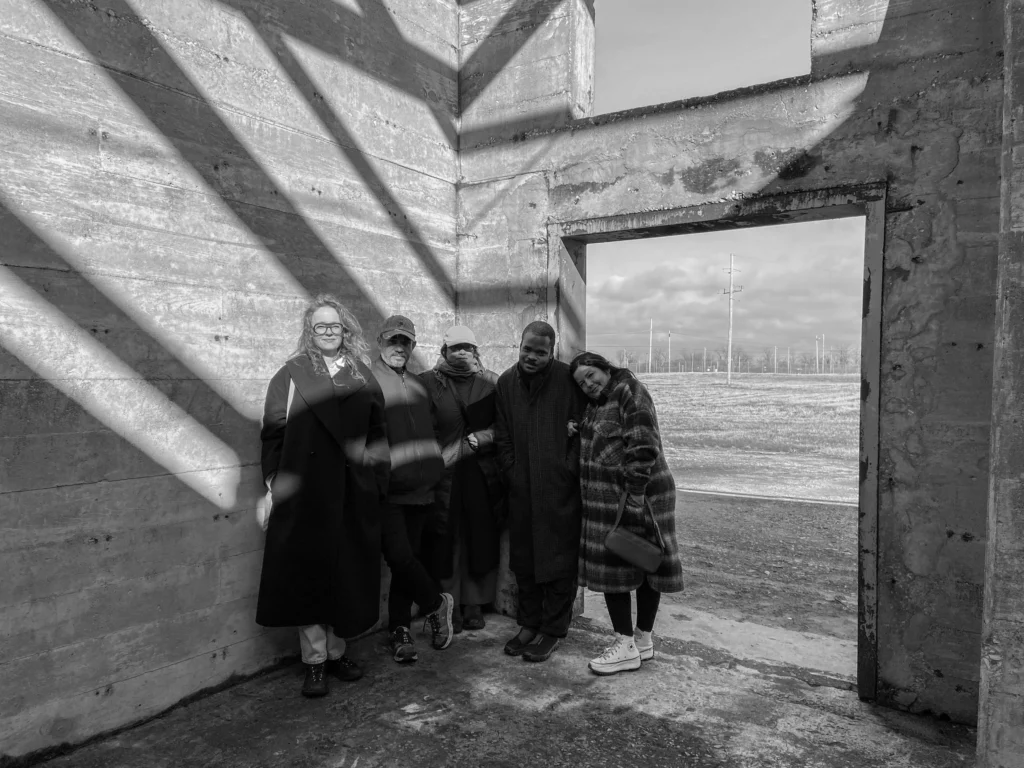
In total, eleven community members were present in a closed session held at The Contemporary Art Museum St. Louis on May 22, 2025, facilitated by Chambers, with facilitation support by Sanders and Abraham Diaz (Community Engagement Manager), who served strictly in a support capacity. Three other community members, who were invited but not able to attend, have asked to stay informed as the document and its action steps develop. Participants were compensated for their time. This intergenerational group of leaders included artists, elders, and community stakeholders. Participants of the circle are members of numerous organizations, including Agriculture for Community Restoration Economic Justice (A.C.R.E.S), Lewis Place Historical Preservation, Fit and Food Connection, and many others.
The meeting to shape agreements was conducted immediately following the May 16 tornado, though it had been planned and scheduled before the tornado. All community members in attendance were directly (in some cases, severely) impacted by the tornado. Given the devastating and long-term implications of the storm on the neighborhoods of North St. Louis and specifically The Ville, the urgency of action and accountability for Counterpublic and all partners were all the more essential to align intent and impact with stated needs.
Tracking/ Accountability
Counterpublic is tracking all activity toward meeting the agreements and reporting back to the community members and partners with periodic status reports.
- Prioritize Local Leadership and Long-Term Presence
- Work with a Community Leadership Council composed of residents who live and work in the neighborhood year-round to guide decisions.
- Compensate community advisors for their time and leadership.
- Hire locally for community engagement and coordination roles.
- Practice Consent and Respect in Engagement
- Develop and publicly share a Media + Storytelling Consent Policy—no photos, videos, or quotes used without written consent.
- Provide multiple forms of outreach (door flyers, phone calls, SMS, church announcements) to respect different communication preferences.
- Train all staff, artists, and partners in culturally respectful engagement practices.
- Value and Compensate Community Labor
- Budget for honoraria or stipends for listening session participants, workshop facilitators, or advisors.
- Ensure that all artist commissions and partnerships include a local touchpoint for accountability and collaboration, with appropriate compensation for that labor.
- Share back reports and insights with the community, including how their input has shaped outcomes.
- Ground Projects in Community-Identified Needs
- During moments of active trauma, transition or a shift in community priorities, pause or postpone art interventions to facilitate listening sessions or realignment efforts based on community needs and requests.
- Co-design art initiatives with localized community collaborators that have functional outcomes – such as sharing information, or providing resources.
- When urgent or unexpected needs arise, redirect funding towards community-identified efforts – (e.g., mutual aid, cleanup crews, housing stabilization).
- Ensure Transparency and Accountability
- Create clarity and transparency around publicly funded projects. Ensure that all community partners and collaborators are aware of the project budgets in which they are involved.
- Share a decision-making map of who makes which calls within the organization and which roles are held by community members.
- Regularly hold open community updates, report-backs, and reflection sessions.
- Commit to Ongoing, Inclusive Communication
- Create a multi-modal communication strategy, including print newsletters, door-to-door outreach, SMS updates, and public signage. Ensure signage has permission on private land, and do not place more signs than needed. Ensure signs are picked up at the conclusion of the event.
- Assign a staff member to follow up with people who aren’t in meetings, especially elders and those without internet access.
- Keep a running list of residents and groups to stay in touch with, including those who may have been active in previous iterations.
- Protect and Reinforce Collective Ownership
- Engage with existing and in-progress community resource maps and support the co-authorship of a Counterpublic-specific map that highlights local leaders, artists, spaces, and resources that should be amplified during the exhibition.
- Strengthen and support community-controlled fiscal conduits to ensure funds flow directly to neighborhoods.
- Share digital and physical tools for communities to retain authorship of their stories, spaces, and projects.
- Center Youth and Intergenerational Wisdom
- Support and collaborate with existing youth organizations and schools to co-develop youth-led projects.
- Strengthen intergenerational mentorship opportunities by uplifting existing efforts and creating new opportunities where needed, pairing young people with elders/artists/community historians.
- Partner with youth councils or forums to inform programming and guide engagement, particularly where such spaces do not yet exist.
- Reject the Nonprofit Industrial Complex When Misaligned
- Reduce partnerships with organizations that leverage community presence without redistribution or accountability.
- Use Counterpublic platforms to support the creation of community-run grantmaking panels or microgrant programs that fund grassroots initiatives.
- Use Counterpublic’s platform to advocate for structural changes to extractive funding models and support alternative, community-centered approaches.
- Honor the Community’s Time, History, and Self-Definition
- Publish and publicly credit the Black histories and cultural contributions of the neighborhoods Counterpublic operates in.
- Support local archivists, historians, and memory workers to build living histories that inform current projects.
- Build in time and protocols for reflection and collective evaluation at each major milestone to honor community trust, acknowledge context (historical and current), and adapt to current lived experiences.