





Press Release
Announcing Counterpublic 2026: Coyote Time
The third Counterpublic Triennial, one of the largest public art exhibitions in the US, spans St. Louis, foregrounding equity and grassroots change with over 50 new artist commissions. September 12–December 12, 2026.
(ST. LOUIS, MO – February 10, 2026) – Counterpublic, a Triennial exhibition based in St. Louis, Missouri reimagining the possibilities of art in public life, is pleased to announce its third edition—Coyote Time—presenting new commissions and historical reinterpretations by 50 contemporary artists and welcoming half a million people across key St. Louis sites from September 12 – December 12, 2026.
Collectively curated by Jordan Carter, Raphael Fonseca, Stefanie Hessler, Nora N. Khan, and Wanda Nanibush, Coyote Time builds on Counterpublic’s mission to connect art with lasting systemic change. The title derives from artist Alice Bucknell’s 2026 Triennial commission, marking the moment in a video game when a character leaps off a cliff and is suspended in midair, unsure of what comes next. This moment of anticipation guides the exhibition, positing uncertainty as a space for experimentation and possibility.
Amid global political and societal upheaval, the 2026 Triennial will present risk-taking new artist commissions, coalition-building public programs, and long-lasting civic initiatives centering urgent concerns including climate, education, and immigration. Engaging historic sites across the storied City of St. Louis, alongside world renowned art institutions and beloved community spaces, the Triennial invites audiences to inhabit Coyote Time: To take the risk of jumping into the unknown with faith, purpose, and intentionality.
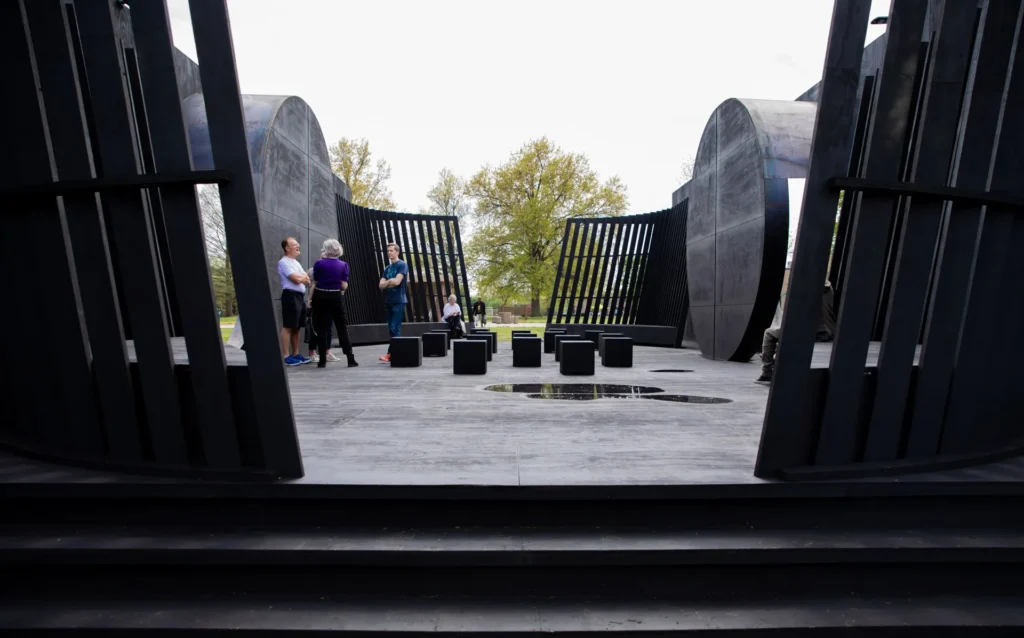
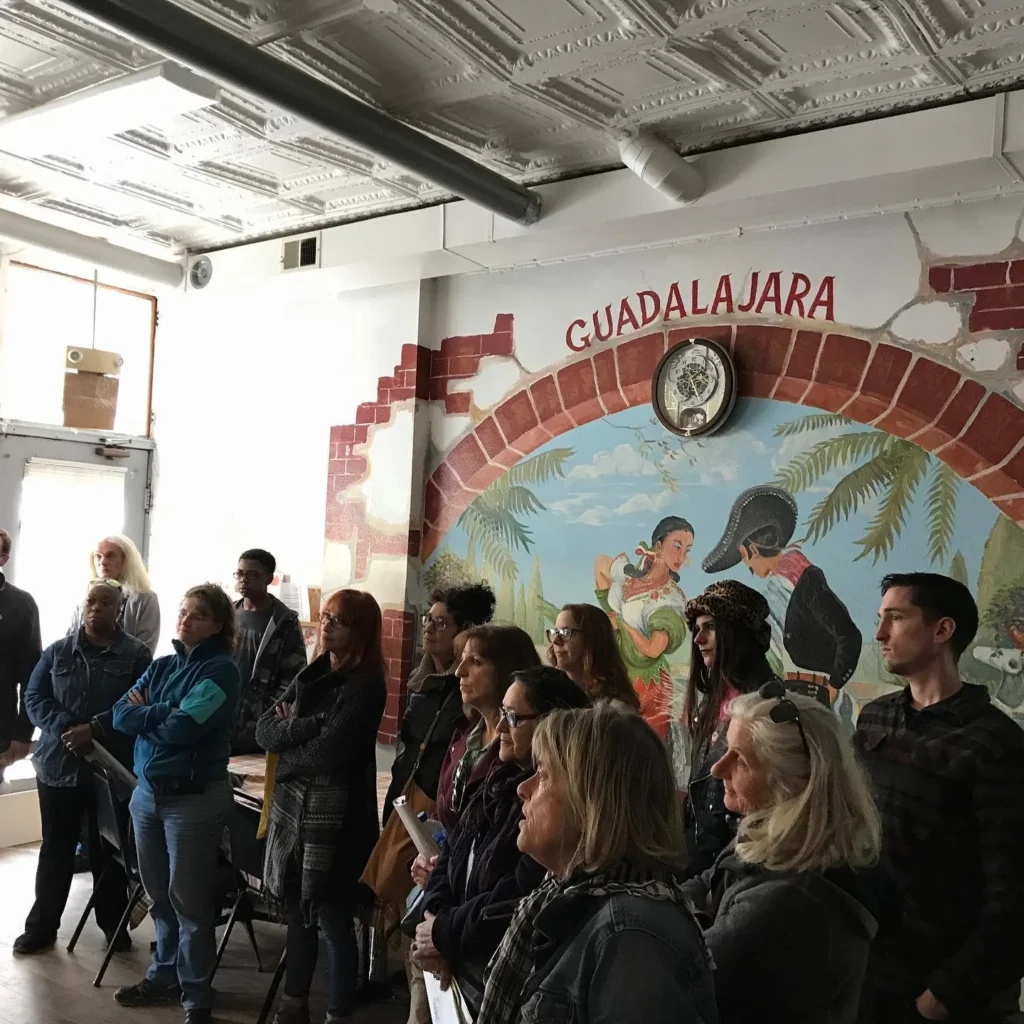
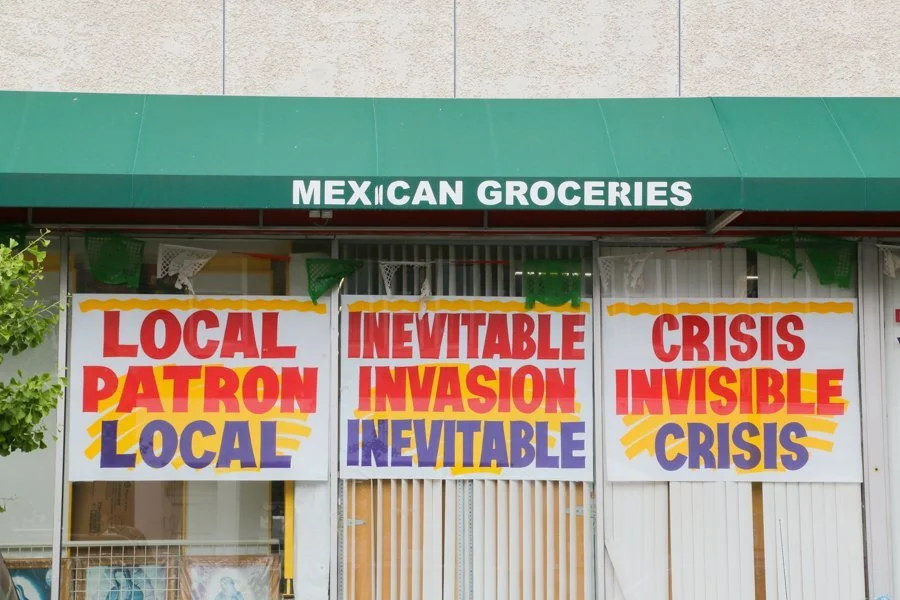
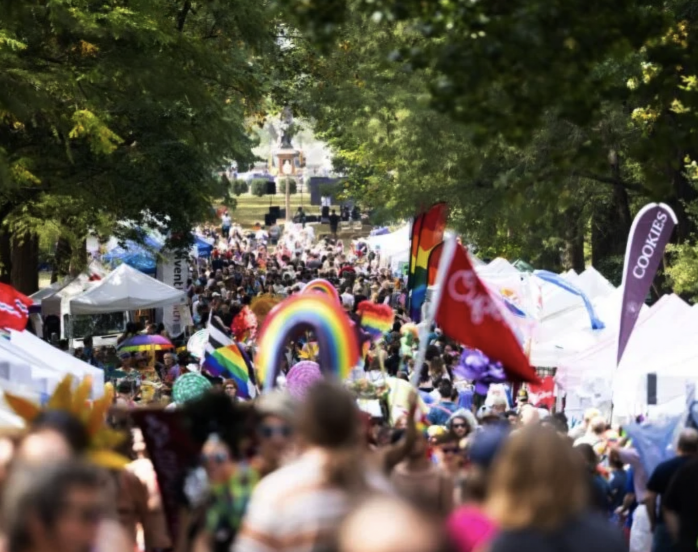
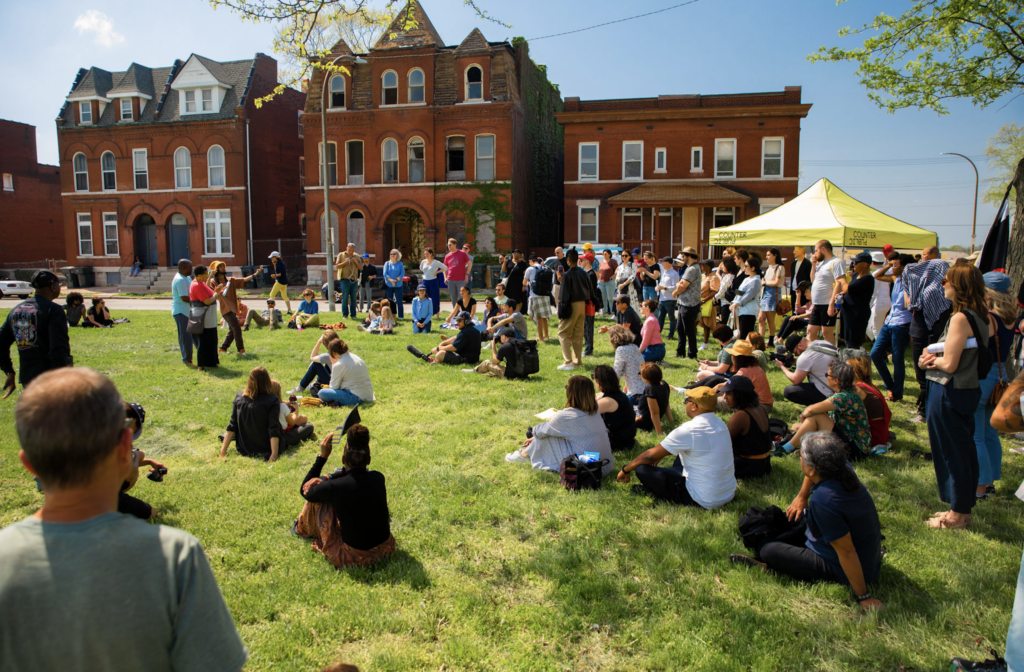
The first Counterpublic Triennial in 2019 emerged as a grassroots movement, activating barbershops, bakeries, parks, and other community spaces across St. Louis. This third edition continues this approach, drawing on conversations with over 1,400 individuals and more than 700 pieces of community feedback.
“Coyote Time embodies the current moment of apprehension but attempts to envision a shared near future with both boldness and hope. Each of our key sites for Counterpublic 2026 has endured a series of crises, including fires, storms, and governmental pressures. The works by these fifty incredible artists converse with the urgencies of the moment and propose new ways of thinking,” said Executive and Artistic Director James McAnally. “It’s an honor to present the third edition of Counterpublic and celebrate St. Louis’s forward-thinking arts and culture community.”
Counterpublic 2026 will engage five key St. Louis sites, each selected for its historic, cultural, and civic significance:
1) The Mississippi Riverfront
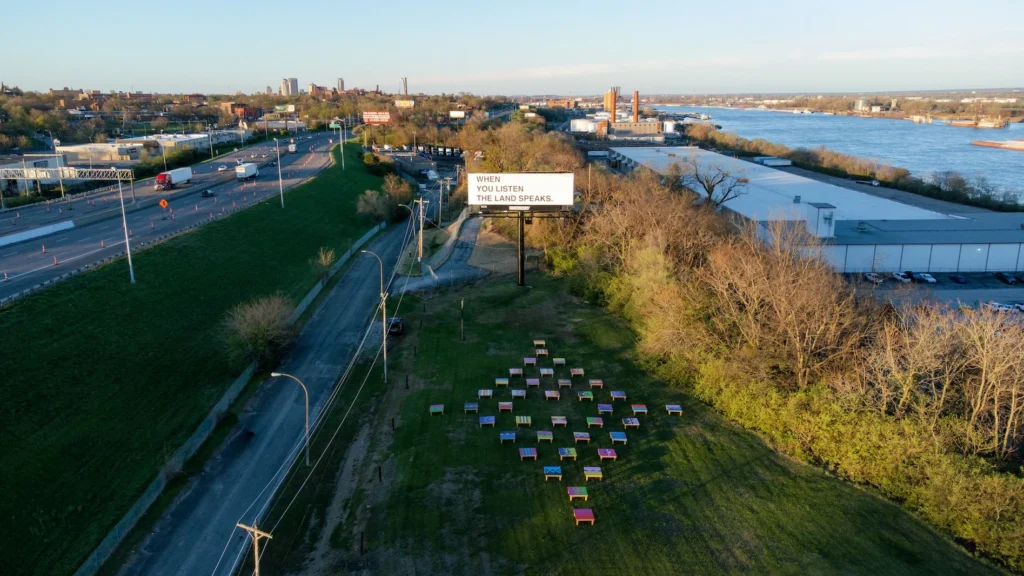
Stretching along the edge of downtown St. Louis, the Mississippi Riverfront—anchored by the Gateway Arch, the symbolic “Gateway to the West”—will host a series of permanent commissions and temporary activations across iconic spaces adjacent to the river.
2) The Ville Neighborhood
One of St. Louis’s most historically significant Black neighborhoods, The Ville—home to cultural figures including Tina Turner, Arthur Ashe, Dick Gregory, and Chuck Berry—will feature new commissions across a high school, community center, public park, and church grounds, engaging both the neighborhood’s legacy and its future.
3) International Institute
Founded over a century ago, the International Institute of St. Louis has welcomed tens of thousands of new Americans through its refugee resettlement program, serving as a vital hub for immigrant communities in St. Louis. In the wake of a full federal defunding, Counterpublic will reimagine the campus with an international team of artists, as well as introduce a full-time fellowship at the Institute.
4) National Building Arts Center and NON STNDRD
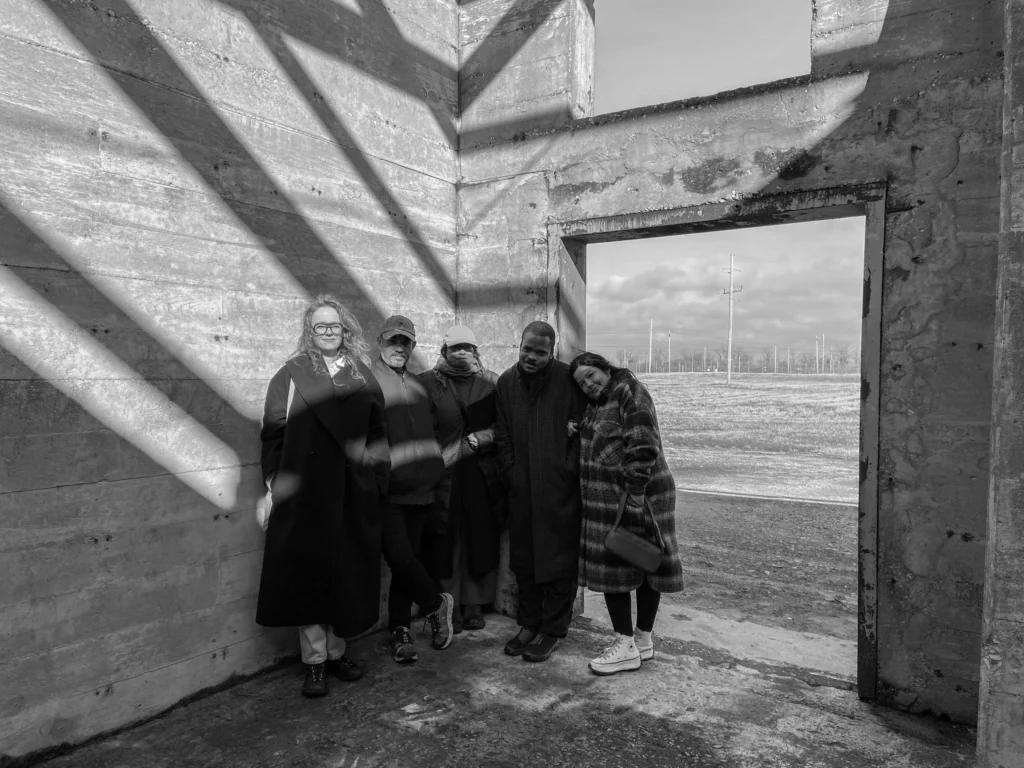
Housed in a decommissioned steel foundry in the former company town of agrochemical company Monsanto, the National Building Arts Center (NBAC) is an emerging institution holding the largest collection of built-environment artifacts in the United States as well as hosting artist space NON STNDRD. Radically breaking from a traditional exhibition space, NON STNDRD presents a site-responsive program of outdoor exhibitions and interventions conceptually inspired and physically determined by the communities and landscapes that surround the American Bottom. In partnership with Counterpublic, NBAC and NON STNDRD will host long-term climate-focused projects, introducing regenerative frameworks at a location closely tied to the origins of the global climate crisis.
5) Museums and Cultural Organizations
Furthering regional, national, and international exchange, Counterpublic will partner with major institutions across the region, including the Pulitzer Arts Foundation, Saint Louis Art Museum, Kemper Art Museum at Washington University in St. Louis, Contemporary Art Museum St. Louis, Kranzberg Arts Foundation, and The Luminary to realize inclusive collaborative commissions.
“Counterpublic invites us to take a leap, to reimagine what public art can do, to build while in motion,” said curators Jordan Carter, Raphael Fonseca, Stefanie Hessler, Nora N. Khan, and Wanda Nanibush. “We aim to contribute to building material and cultural infrastructures for lasting change, while fostering critical conversations and furthering investment in supporting ambitious and experimental artists.”
Counterpublic 2026: Coyote Time’s identity was designed by Omnivore as a key component of the exhibition. Created through capture of the movement of flashlights in the dark, the identity will evolve over time with the changes of light through different times of day, sites and seasons amidst both tangible and metaphorical moments of darkness and light.
The Counterpublic 2026 catalogue will be released timed to the opening of the Triennial by Inventory Press. It will be a full color publication, featuring contributions from notable curators, writers, and artists.
Press Contact:
Cultural Counsel
counterpublic@culturalcounsel.com