

















WayBack
2023 Not on view

Details40 wooden platforms painted and embellished with ribbons and tile, sound
Curator Risa Puleo
Address
4420 Ohio Ave
St. Louis, MO
Site Description
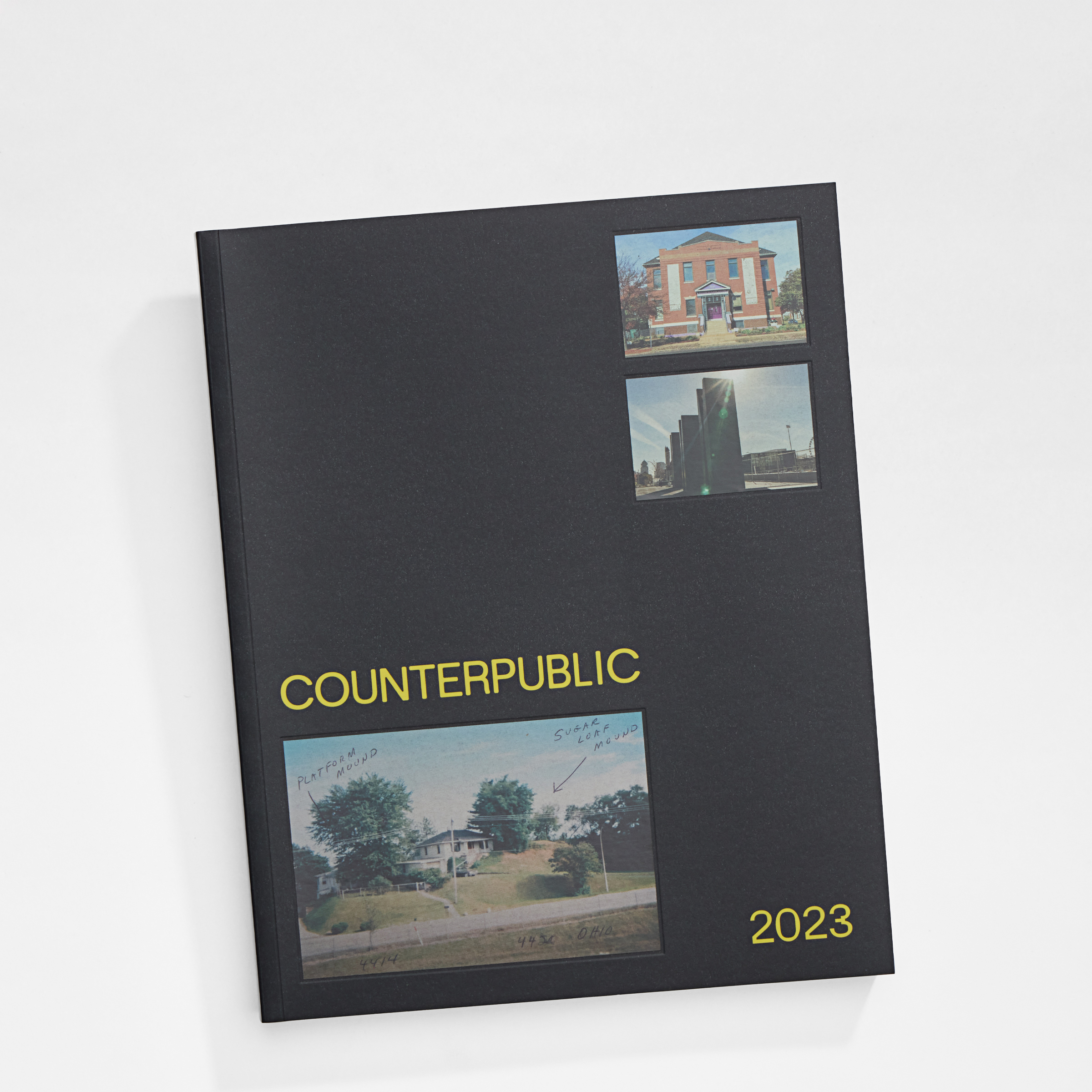
Sugarloaf Mound is the oldest human-made structure in St. Louis and the last intact Native American mound in what was once known as “Mound City.” Located on the south St. Louis riverfront, Sugarloaf is thought to be a Woodland period burial mound or a Mississippian platform mound. As the center of the Mississippian peoples in the Mississippi River valley, Cahokia formed the largest city in the present-day United States, rivaling London at its height before its sudden and still unexplained collapse. The most evident mark of this advanced society is in the earthen mounds that reshaped the terrains of the region, from the largest earthwork in the Americas at Monks Mound in Illinois through the prominent twinned mounds on the St. Louis riverfront in Big Mound to Sugarloaf Mound and the hundreds of other mounds that were spread throughout the region. In the city of St. Louis, of these, only Sugarloaf Mound remains in public view, a sacred site for the Osage People and the last opportunity to preserve this history in the City of St. Louis. The summit of the mound was purchased by the Osage Nation in 2009. For the 2023 exhibition, Counterpublic will present artwork adjacent to the site, and is partnering with the Osage to support preservation and spread public awareness of the mound, and is engaged in an effort to purchase or transfer the remaining two homes still occupying the mound to the Osage Nation in line with their preservation plan. For more information about Sugarloaf Mound, and our efforts to support the Osage Nation’s efforts to preserve the mound, please visit their website here.
Artwork Details
About the Artwork
Created in collaboration with her son Nokosee Fields (Osage/Cherokee/Muscogee), Anita Fields’s (Osage/Muscogee) WayBack invited visitors to gather in physical relation to each other, to Sugarloaf Mound, and to Osage ancestors, history, and legacy. When the Osage Nation purchased part of Sugarloaf Mound in 2007, the sacred site was reabsorbed into the Nation through the auspices of property, extending Osage territory from the site of their displacement in Oklahoma back to their ancestral homeland. Atop this site, forty platforms were installed, modeled after those found at Osage events in Oklahoma. Each platform was embellished with ribbons that reference Osage cosmologies of balance between sky, water, and earth. Nokosee Fields’s composition for wind instruments invited further consideration of the earth from which the mound was constructed, the sky that unfolds above the platforms, the sound of the Mississippi River on the banks below the quarry and the wind that flows through the surrounding trees that transform first into breath. After the exhibition, the platforms traveled from St. Louis to Tulsa where they were distributed to Osage community members, completing the link between the current home of the Osage Nation and its ancestral homelands.


