








Theorem, no. 3
2023
Artist Maya Stovall
Curator Allison Glenn
Address
3610 Grandel Square
St. Louis, MO
Site Description
Located at 3610 Grandel Sq. in the Grand Center Arts District, The Grandel is a multi-use arts facility renovated by the Kranzberg Arts Foundation. The Grandel is home to a state-of-the-art theater, award winning music and art venue The Dark Room, and the Grand Hall event and rehearsal space. The Grandel is located in the former First Congregational Church building (1884). This historic building was converted into a live theater in 1992, serving as the home stage for The Black Rep theater company and also the St. Louis Shakespeare theater company. The Kranzberg Arts Foundation fully renovated the building, prior to its reopening in 2017.
Artwork Details
About the Artwork
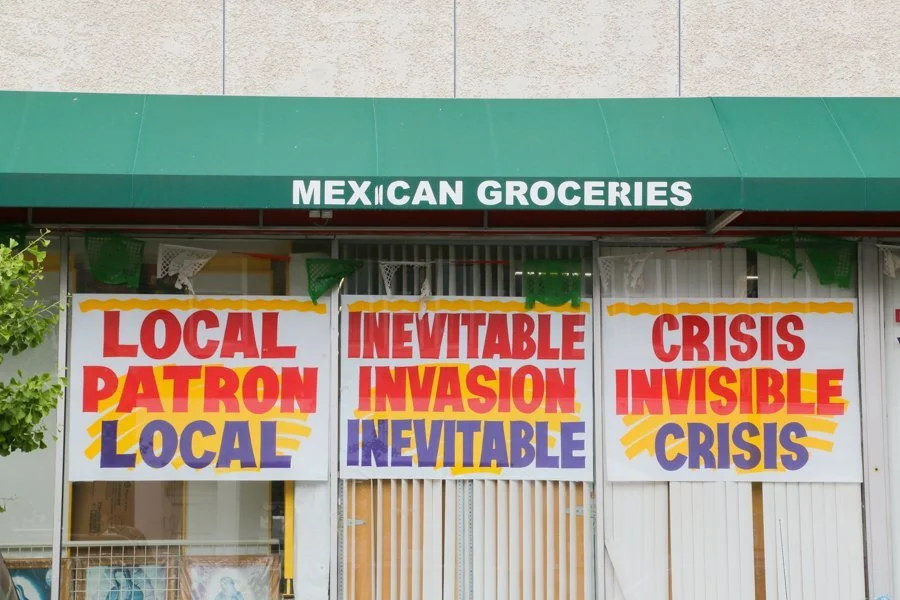
Theorem, no. 3 contemplated and assumed control of institutional and repressive state apparatuses through its logic, as apparatus. The artist employed a careful approach that prioritized the trust and anonymity of participants in no strings transmissions of the official currency of the United States of America. The linguistic actions of Theorem, no. 3 included an unauthorized Presidential Letter of Apology, where Stovall, through artistic license, assumed the position of President of the United States of America and wrote an unauthorized public apology for the crimes against humanity committed by the U.S. Government and its designees between 1526 and 1968.
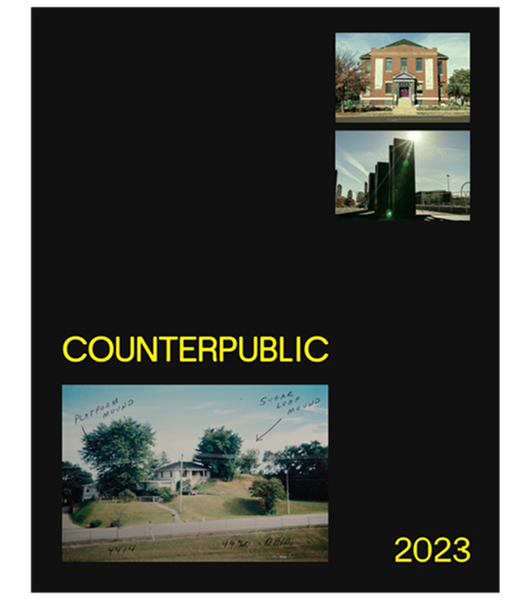
Following the unauthorized Presidential Letter of Apology was Stovall’s Resolution on State Terror, a dossier of evidence-based judgments formulating the U.S. Government’s hypothetical binding decision to pay $744,352.00 compensation for present heirs to close the wealth gap. The unauthorized Presidential Letter of Apology and the Resolution are (re)presented and (re)performed in the Counterpublic Catalog.
Thus, in Theorem, no. 3, the artist, as new apparatus, unfurled a transformative methodology for concretized reparations connected to the histories of inequity in St. Louis and in dialogue with local, national, and international reparations movements.