








State Names Map: Cahokia
2023 Permanent Artwork
Artist Jaune Quick-to-See Smith
Curator Risa Puleo
Address
2701 Cherokee St
St. Louis, MO
Site Description
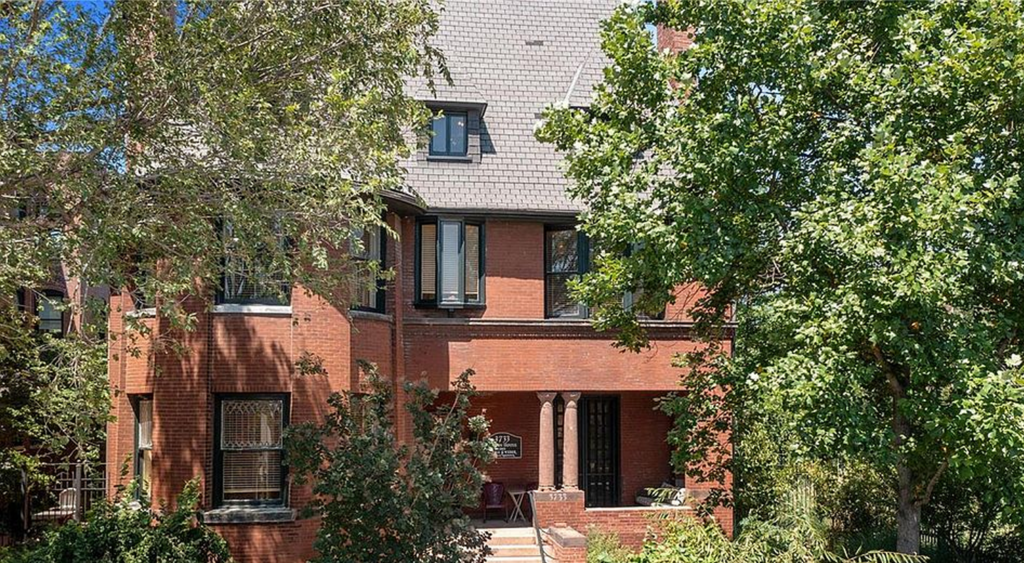
Monaco was an artist-owned cooperative that operated as an alternative to the traditional gallery model. Monaco was an independent project directed by its members and was initiated by The Luminary as a part of its mission to support new artist-centric spaces.
Artwork Details
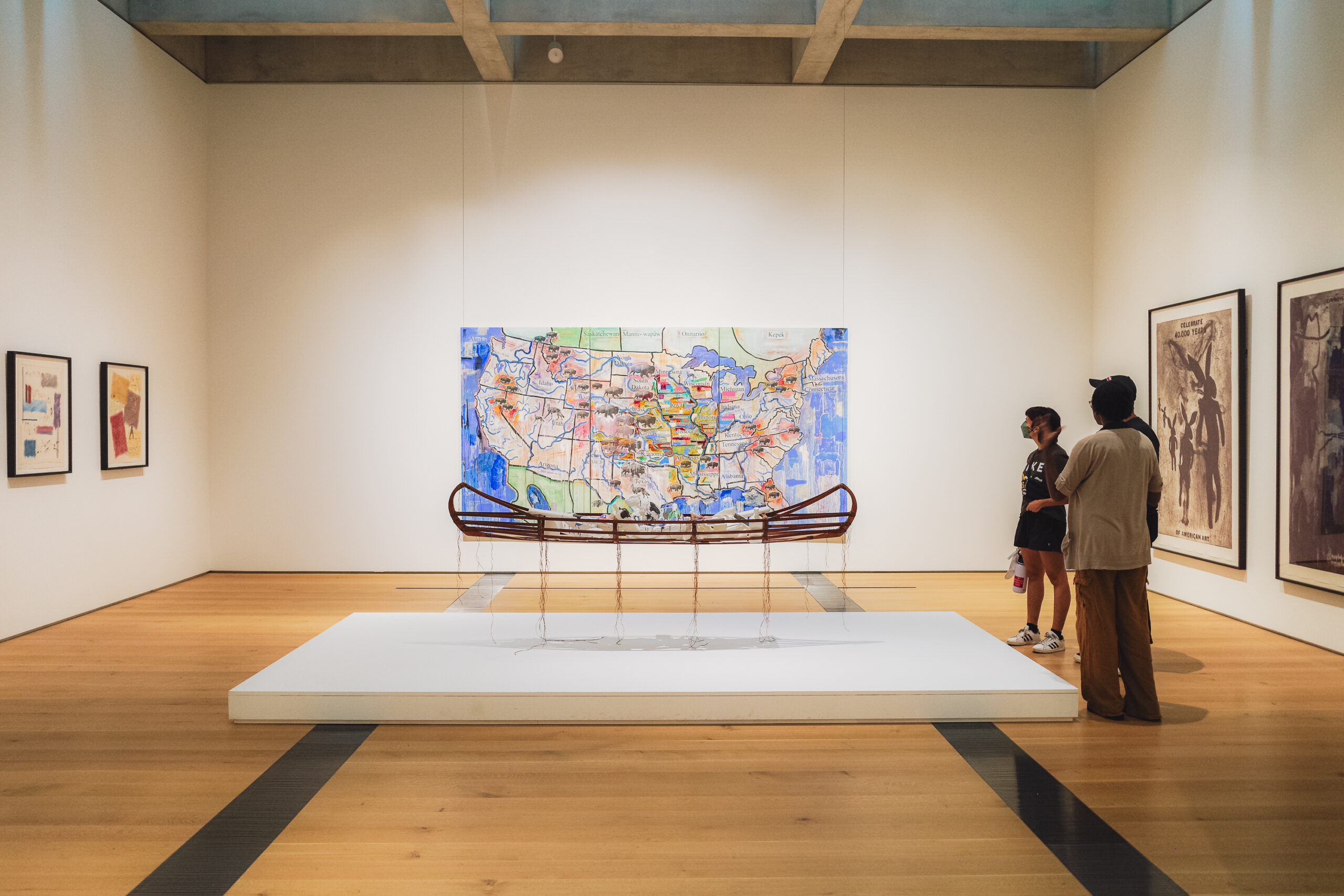
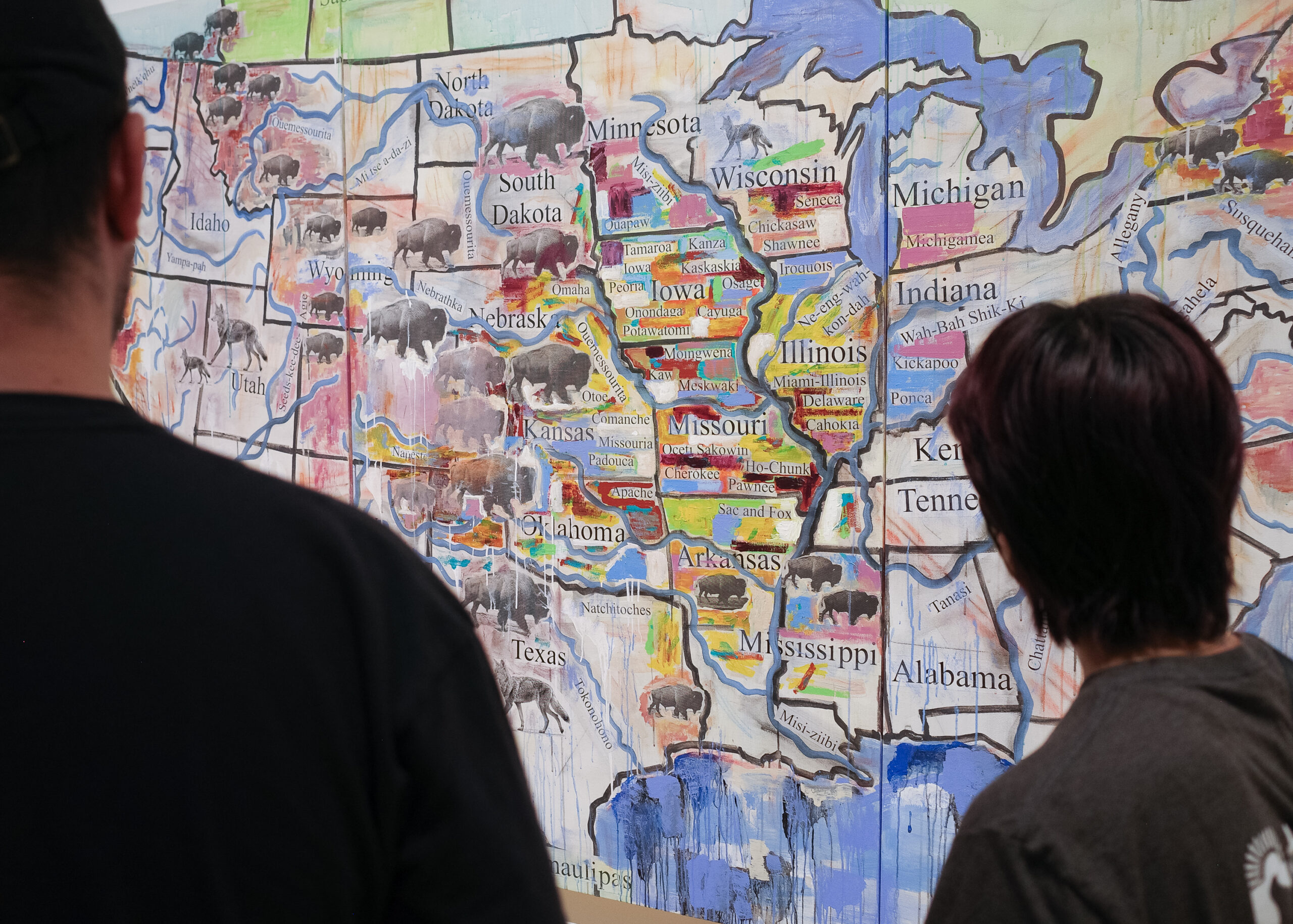
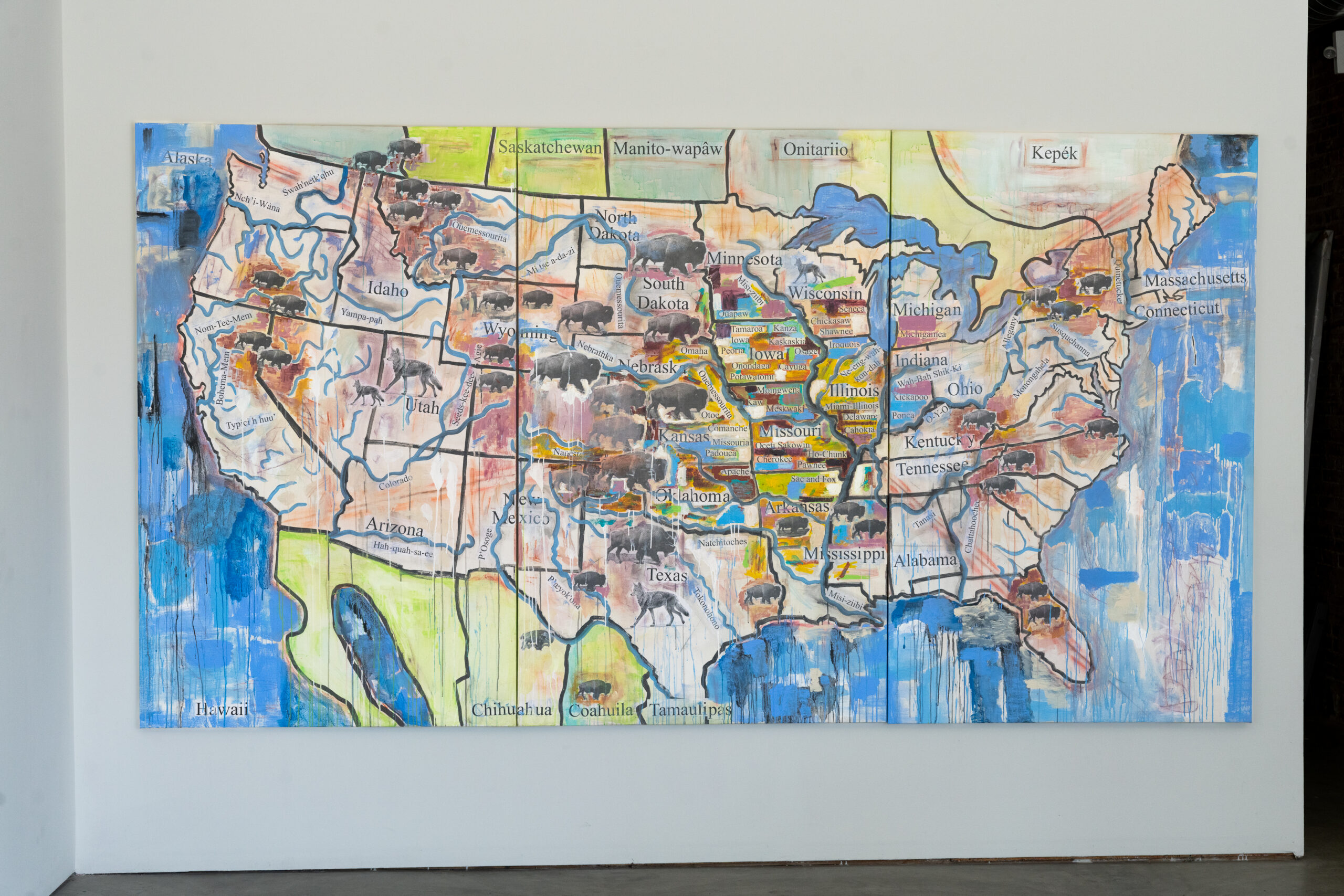
State Names Map: Cahokia
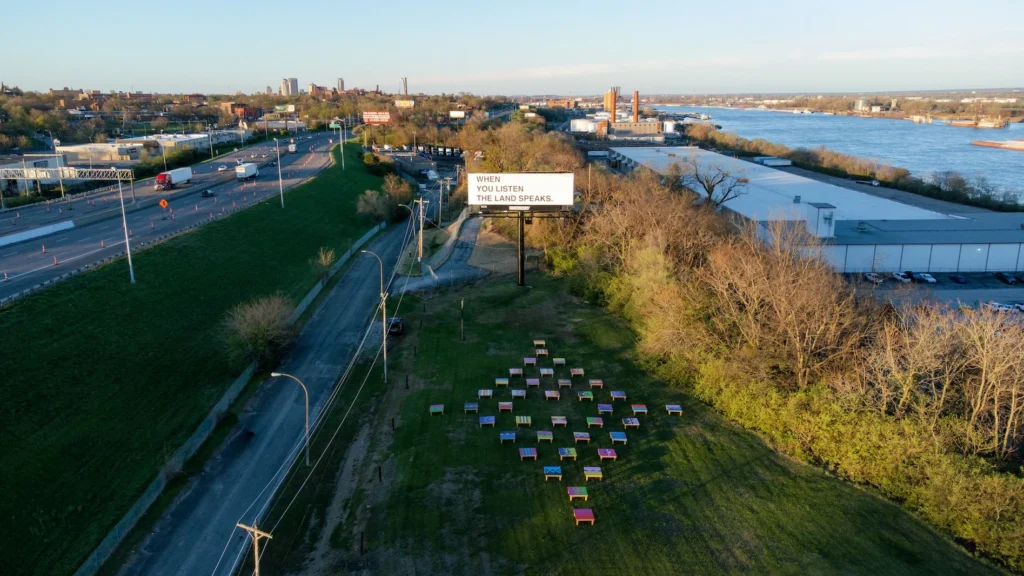
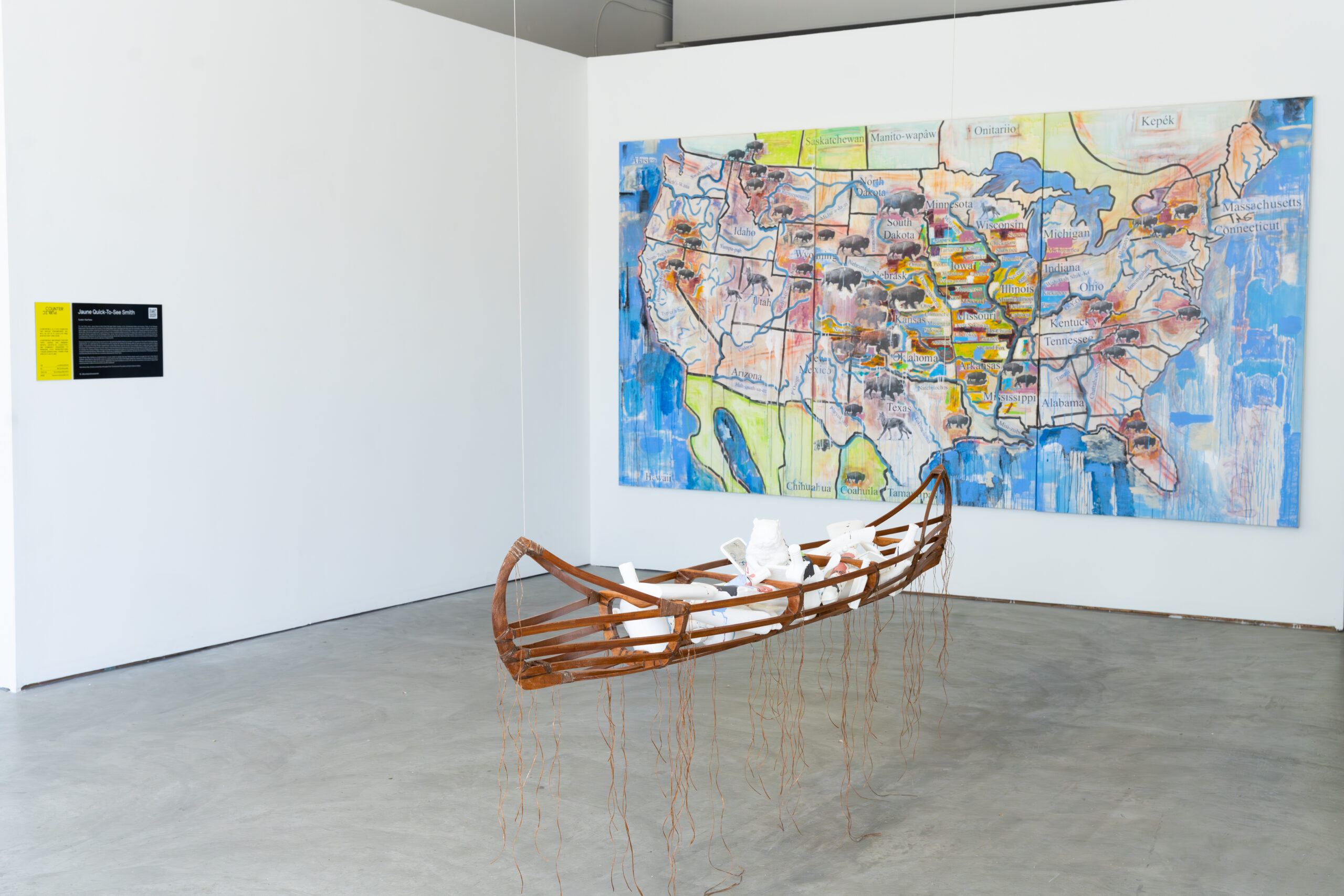
For over thirty years, Jaune Quick-to-See Smith (Enrolled Salish member of the Confederated Salish and Kootenai Tribes of the Flathead Reservation) disrupted the iconicity of the United States map in paintings that insist upon the sovereignty of Native people, reclaiming the land’s image as a symbolic reclaiming of the land itself. For Counterpublic 2023, the artist began her research-intensive painting process for State Names Map: Cahokia by exploring St. Louis’s history of trade. Long before settlers arrived in the region then called Cahokia, it was the center of a vast trade network supported by the Mississippi River whose major and minor tributaries guided Native peoples from across the Americas including lands in Montana from where the artist is ancestrally descended. State Names Map: Cahokia asks us to look beyond the flattened space of the United States map to see the vastness of Indigenous life.
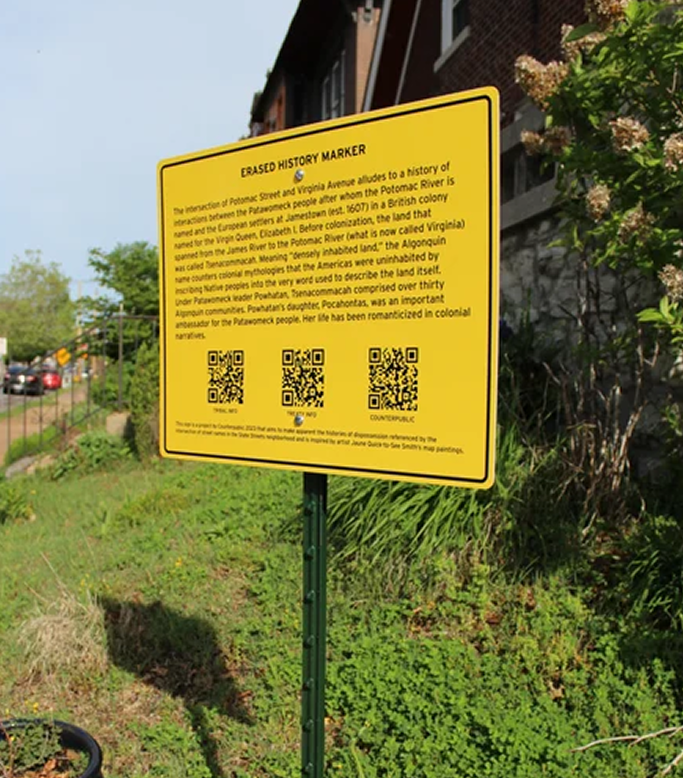
Quick-to-See Smith re-enlivened these networks in her map painting installed at Monaco, which was an artist-run cooperative in the center of the State Streets neighborhood—so called because its north-south-running avenues are named for US states while its east-west streets are named for Native nations. Throughout the State Streets neighborhood, curator Risa Puleo used the format of the exhibition label to adapt street signs installed throughout the neighborhood to bring forward the histories of dispossession hidden within them. Thus, for example, the crossing of Missouri Avenue and Osage Street indexes the history of nine treaties that forcibly removed Osage people from their ancestral homelands between 1808 and 1865 in the process of establishing Missouri’s statehood. Similarly, the intersection of Tennessee Avenue and Cherokee Avenue (where Monaco is located) references the Trail of Tears.
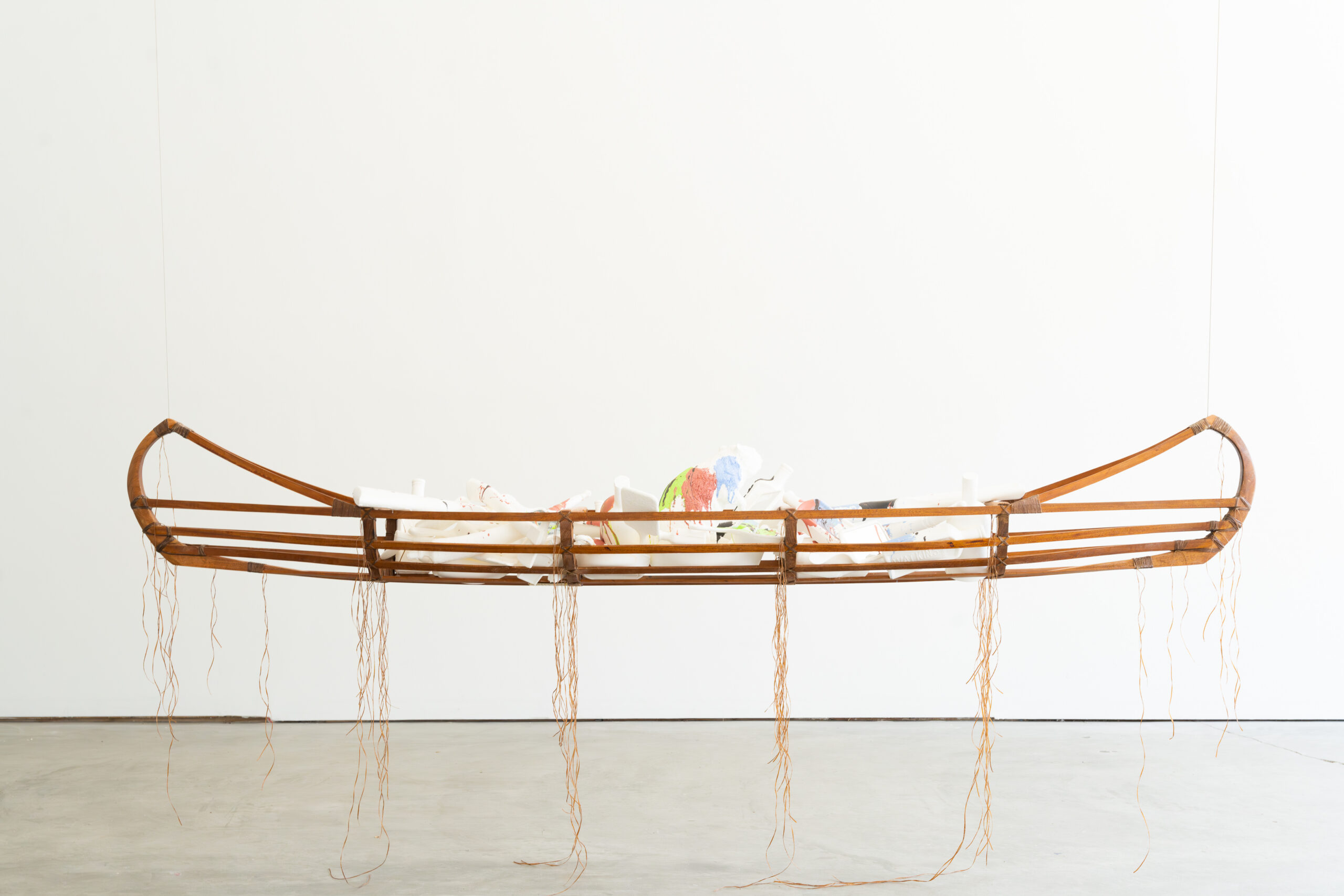
Trade Canoe: Osage Orange
State Names Map: Cahokia is complimented by a canoe, similar to vessels that some Native people used to navigate the river in their trips to Cahokia. Jaune Quick-to-See Smith’s version is constructed from the wood of the Osage orange tree, named for the Native people who lived in Missouri and Arkansas where the tree grows. Additionally, the artist has filled the canoe with cast-resin recreations of the type of objects that would have been traded at Cahokia before and after settlement.
Artwork Images
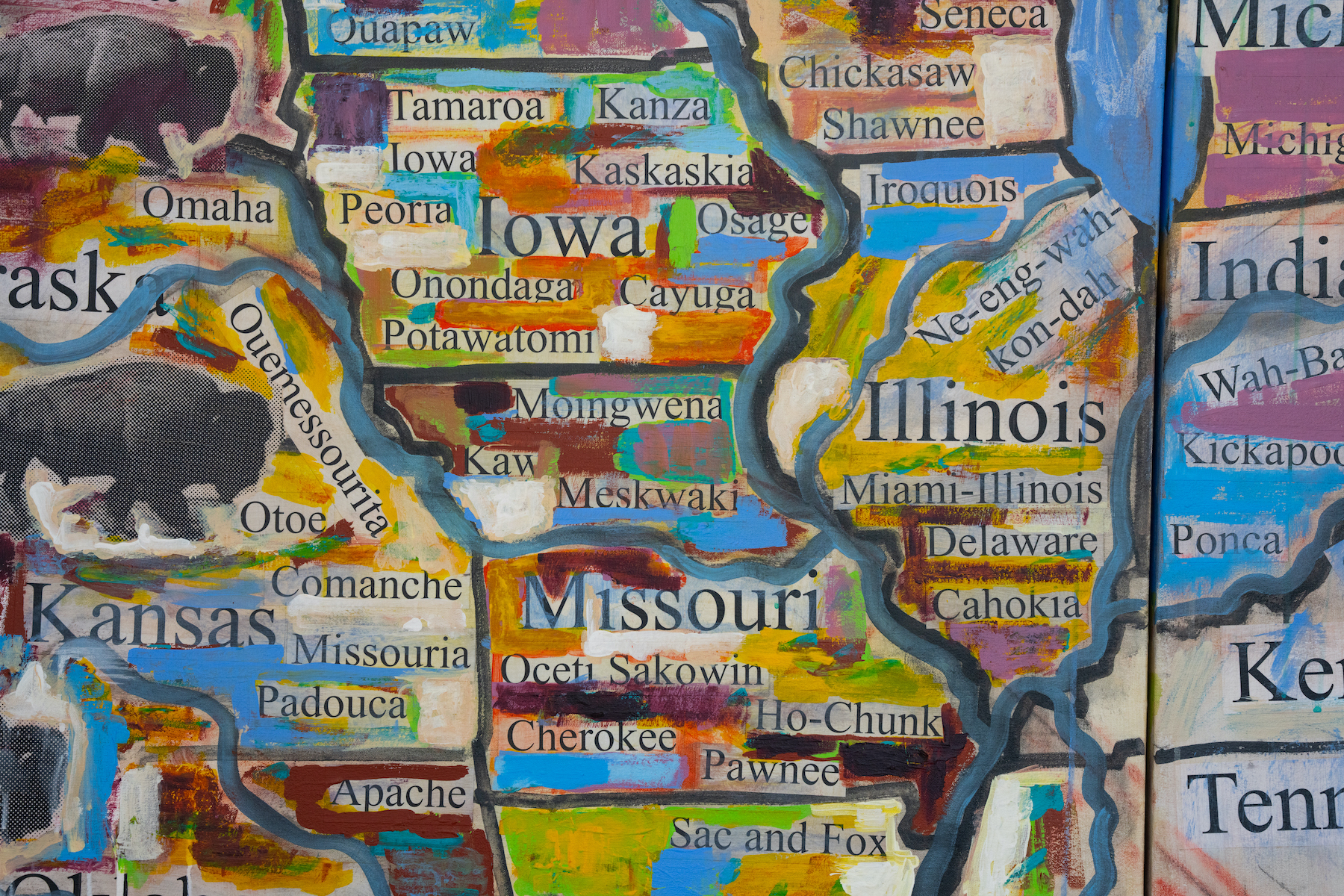
State Names Map: Cahokia was presented with support from The Horseman Foundation and Garth Greenan Gallery.
Acquisition
Saint Louis Art Museum
After the closing of the Counterpublic 2023 triennial, Quick-to-See’s State Names Map: Cahokia and Trade Canoe: Cahokia were acquired by the Saint Louis Art Museum (SLAM). Based on two of her long-running series, the painting and sculpture respond to deep histories of cross-cultural trade and Indigenous displacement associated with the St. Louis region.
The following May, the Jaune Quick-to-See Smith exhibition opened at SLAM, which highlighted Quick-to-See Smith’s works from the Museum collection. As one of the most celebrated contemporary artists of Indigenous heritage, this exhibition spanned Smith’s career and drew attention to her work in St. Louis. In addition to the newly acquired works, early pastels and a series of prints from the mid-1990s were on view, many of which the artist made in St. Louis at Washington University’s Island Press, provided a long view of the artist’s career.
Artwork Images